About us
That's what it is all about.
Why Inspirit exists
Akseniya spent years working alongside consultancies billing millions a year and producing content with near-zero engagement. Nine of ten participants told her privately her work was the best professional development they had attended. The firms were unwilling to change how they operated. She left.
Sebastian arrived at the same conclusion from a different direction. Years of clinical work inside Peruvian prisons, Colombian guerrilla rehabilitation programs, and acute crisis intervention. He worked with people under conditions that stripped every social performance away. When he entered corporate practice 20 years ago, he found the same human beings wearing a different costume.
The industry offers two choices. Comfort that produces no change, or confrontation that leaves people broken. Neither is what leadership teams need.
Connection is not something you manufacture. It is already there in most organizations. It is being blocked, by one person working against the group or by an unspoken conflict that has hardened into policy. The work is to remove what is in the way.
We create the connection leadership teams cannot create on their own.

Psychologist
Akseniya
Asenova.
Akseniya is multilingual, working across German, English, and Bulgarian. She works internationally with senior leadership teams across DACH and beyond. She enters rooms all over the world and reads the same thing: people who want to connect and do not know how to stop blocking it.
In the first hour, she sees what most practitioners spend months trying to surface. Behavioral patterns, group dynamics, the one person whose presence is organizing everyone else's silence. She works with precision, not urgency.
Where Sebastian creates friction, Akseniya creates the safety that makes friction survivable.
“Hard on the point, warm on the person.”
Akseniya, on the method
Clinical psychologist
Sebastian
Körber.
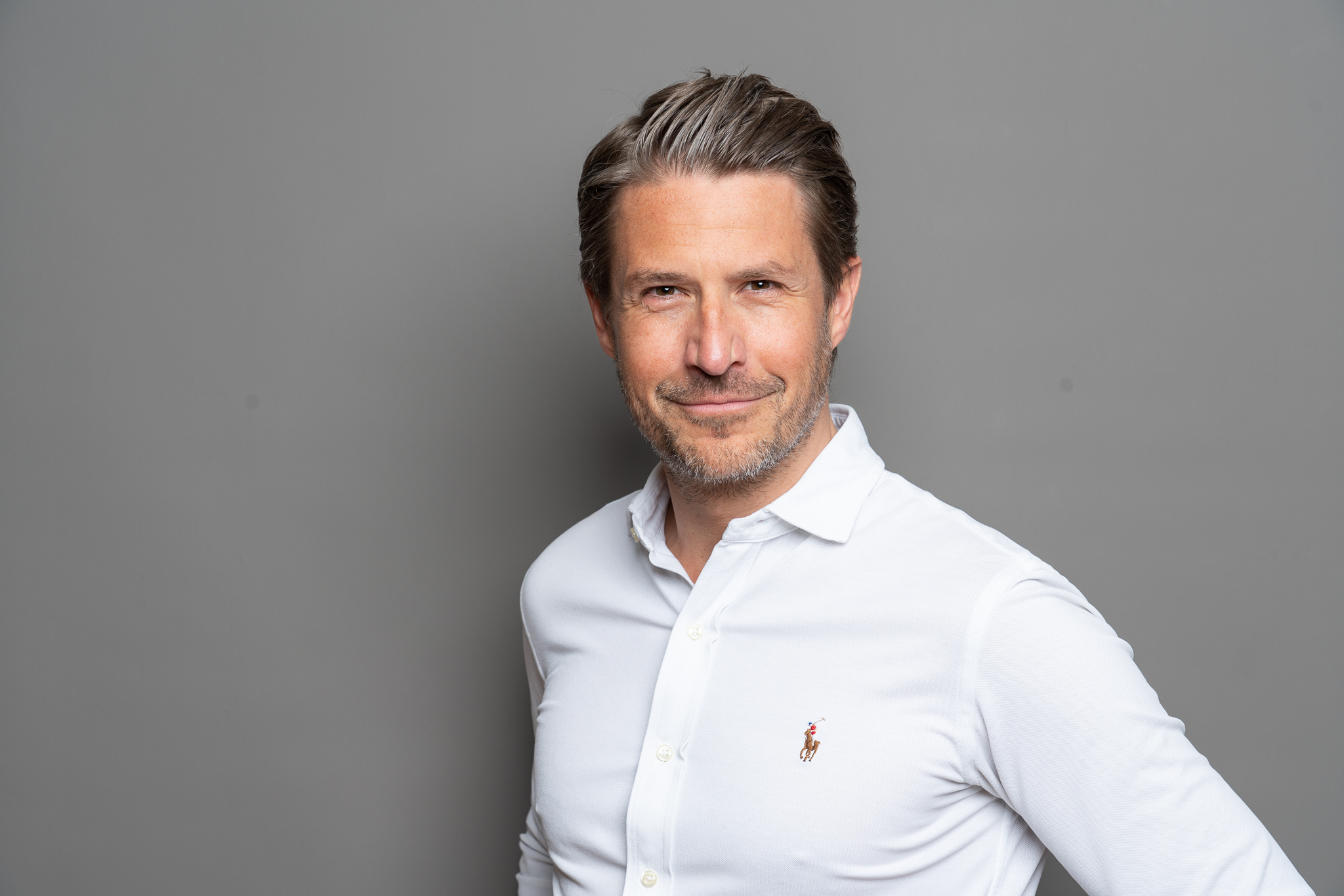
„I'm not there to be liked. I'm there so you can trust each other.“
Sebastian, in the room
Sebastian started where social performance stops working. As a prison psychologist in Peru, in rehabilitation programmes with former guerrilla fighters in Colombia, and for seven years in crisis intervention, he learned that the fastest way through a difficult human situation is not around it. It is directly through it.. In 2010 he brought that into corporate life with sekoerber, opening up leadership teams that had stopped telling each other the truth. Many of the companies he worked with grew alongside the work, Translogica from 25 to more than 170 people. In 2026, trend ranked sekoerber third among Austria's Growth Champions.
His early work was fast, sharp and highly cognitive. It suited boardrooms. It did not suit everyone. Over the years he changed how he works: less surface structure, more depth. Less winning the room, more reading it. Today he sees awareness, the ability to notice what is happening in you and between people before you react, as the leadership capability that matters most in the age of AI. Precisely because no machine can do it for you.
At inspirit, Sebastian brings the breakthrough: the moment a stuck team names what it has been avoiding. Together with Akseniya, he built what he could not build alone: a method and a team that make sure what opens up stays open. Sebastian is Associate Professor at Central European University, lectures at WU Executive Academy and others. He works in English, German and Spanish.
The two-role method
The confronter creates friction that forces a room out of its professional habits. The container holds the safety that makes what surfaces from that friction processable. One without the other produces either a room broken open with nowhere to go, or a room that felt very supported and changed nothing.
The roles are trained, not improvised. They demand clinical reading of group dynamics in real time, and the discipline to work off the other force in the room, whether that force is a second practitioner or held internally by the same person. The tension between those two roles is how the room moves.
Sebastian and Akseniya built and currently deliver the method. Some engagements ask for the pairing in the room. Others are held by a single practitioner trained in both roles. The method, not the headcount.
The range
Most of this market is one of two things. Consultants who read the system, the strategy, the market, and never the person in the room. Or psychologists who open the person, turn the room into a self-help circle, and lose the business entirely. Pick one and you are working half the problem.
We hold both at once. Systemic and business-sharp, then, the moment the system needs it, straight into the intrapsychic process that is actually moving the organization. We read what happens between people, and what happens inside them.
Then we move. From one person's inner world out to the team, the organization, the market, and back, connecting the very small to the very large. Most work across three levels. We work across many.
Where the work reaches
- 01The professional role
- 02The social role
- 03The ego & the self-concept
- 04The team
- 05The organization
- 06The market
- 07The world
Five values
Most values pages are a wall. Ours are a contract. Each one below is something the work requires of us first, and of you second. If a value cannot be lived in the room, it is not a value, it is decoration.
Candor.
Saying the thing nobody else will say. We do it first. Then the room can do it back. Without the first, the second never happens.
Courage.
Trust does not come from comfort. It comes from being willing to be uncomfortable in front of each other. The work asks for the move that costs you something. We protect that move when you make it.
Integrity.
We refuse engagements where the conditions for change are not there. Inside the room, that means staying on the point even when the point is unflattering. Process quality is non-negotiable.
Impact.
A workshop is not real until something moves outside the workshop. We measure ourselves on Monday morning, not Friday afternoon.
Connection.
Not manufactured. Not a closing exercise. The thing that is already there in your team, once the four above clear what was blocking it.
Truth is an obligation, not a brand value.
The integrity gate
We decline engagements where the conditions for the work do not exist. The three we hold to:
HR is driving without visible C-suite commitment.
If the actual authority is not involved, the change does not stick. Sometimes they are not even in the room.
Scope is defined by procurement, not by the situation.
The work shapes the proposal, not the other way around.
The two of us do not both agree the engagement will work.
If both founders are not aligned on the fit, we say no.
If you have read this far
Something here
resonated.
The teams who work with us already know what the problem is. They need someone who will say it in the room.